Step 1
0-6 min
Fit request and first-session frame
Confirm the buyer context, pilot price shape, legal boundary, and the workflow artifacts expected from the first working session.
Output: A scoped first-session agenda, not a legal opinion request.
Pilot walkthrough
The walkthrough is built around the first working session: scope posture, evidence gap map, associated-person chase list, board-pack blockers, and the follow-up evidence needed before production onboarding.
First session output
The setup guarantee is limited to producing workflow artifacts. It does not certify scope, reasonable procedures, privilege, legal advice, or defence success.
First-session agenda
Step 1
0-6 min
Confirm the buyer context, pilot price shape, legal boundary, and the workflow artifacts expected from the first working session.
Step 2
6-9 min
Open the Zenith Mutual scope posture, keep the wording to appears likely, appears unlikely, or uncertain, and preserve reviewer prompts for legal confirmation.
Step 3
9-18 min
Show how the fictional risk register, training export, control matrix, quarterly monitoring review, all-staff briefing, and due-diligence replacement memo map against all six Home Office fraud-prevention principles without treating mapped evidence as legal conclusions.
Step 4
18-21 min
Show Northstar Introductions as the pending high-risk introducer, Helio Partners as the completed response, scoped attestation links, overdue owners, and the no-account external response path.
Step 5
21-30 min
Close on the two fictional board-pack blockers: human review still needed for two evidence items, and the high-risk introducer attestation still pending.
What good looks like
The Zenith Mutual exemplar is deliberately fictional. It shows how a buyer should expect source evidence, human decisions, replacement history, and attestation state to line up across the product without implying legal sufficiency.
Demo tenant screens
These screenshots were captured from the deterministic Zenith Mutual demo tenant. They show product workflow state and are labelled as demo screens in the image itself.
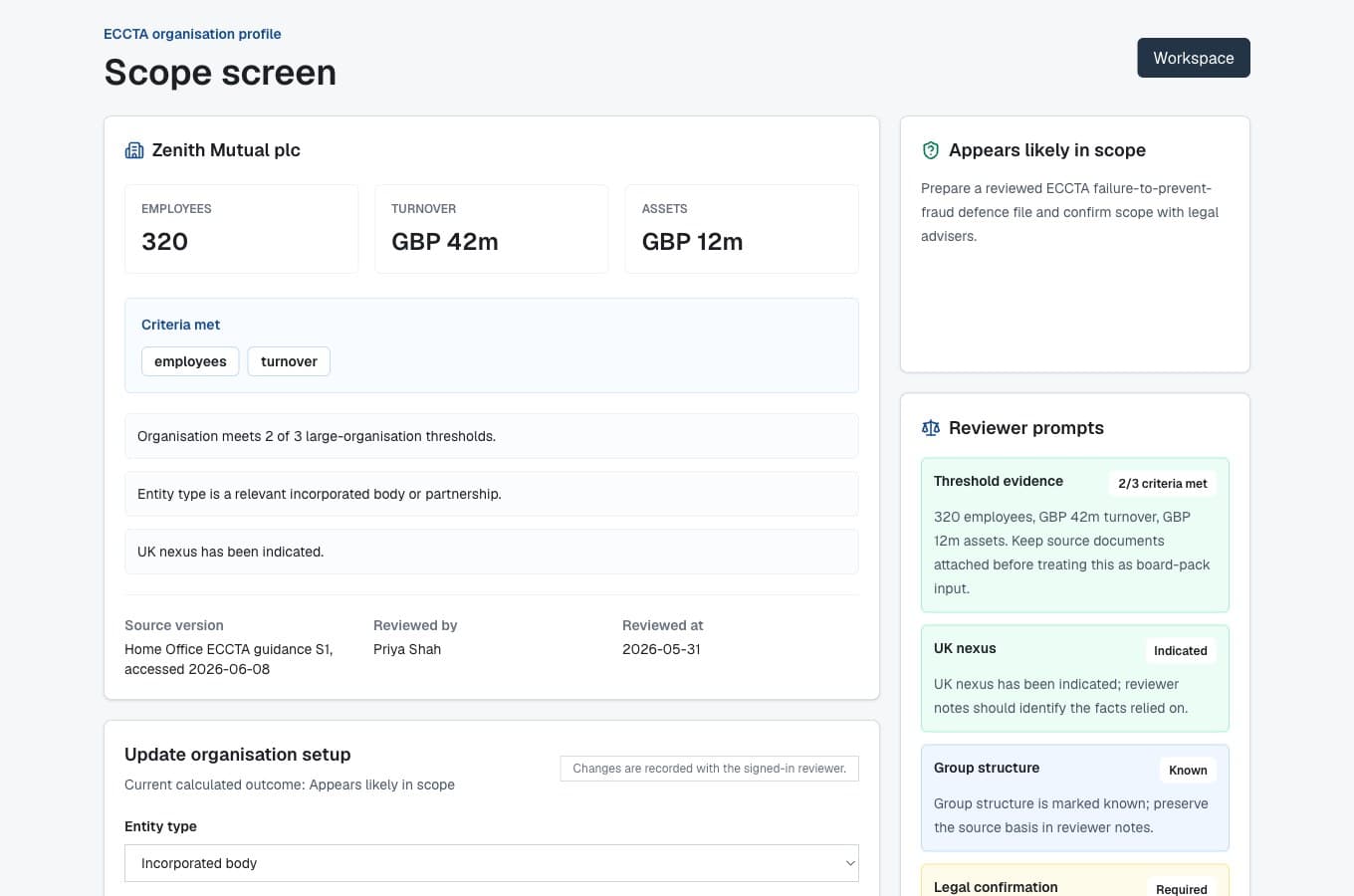
The fictional Zenith Mutual scope posture uses cautious wording and reviewer prompts; it does not certify that an organisation is in scope.
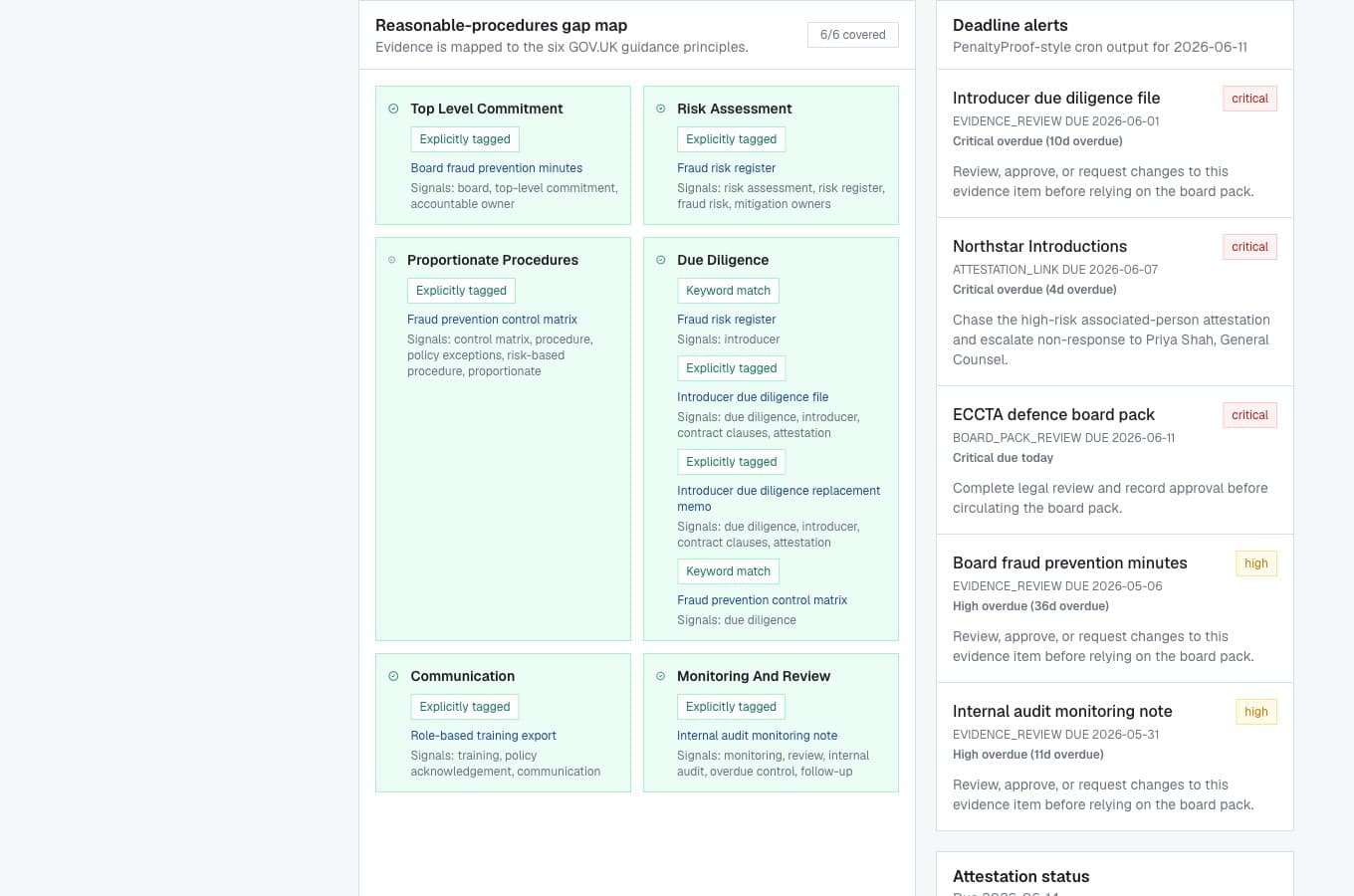
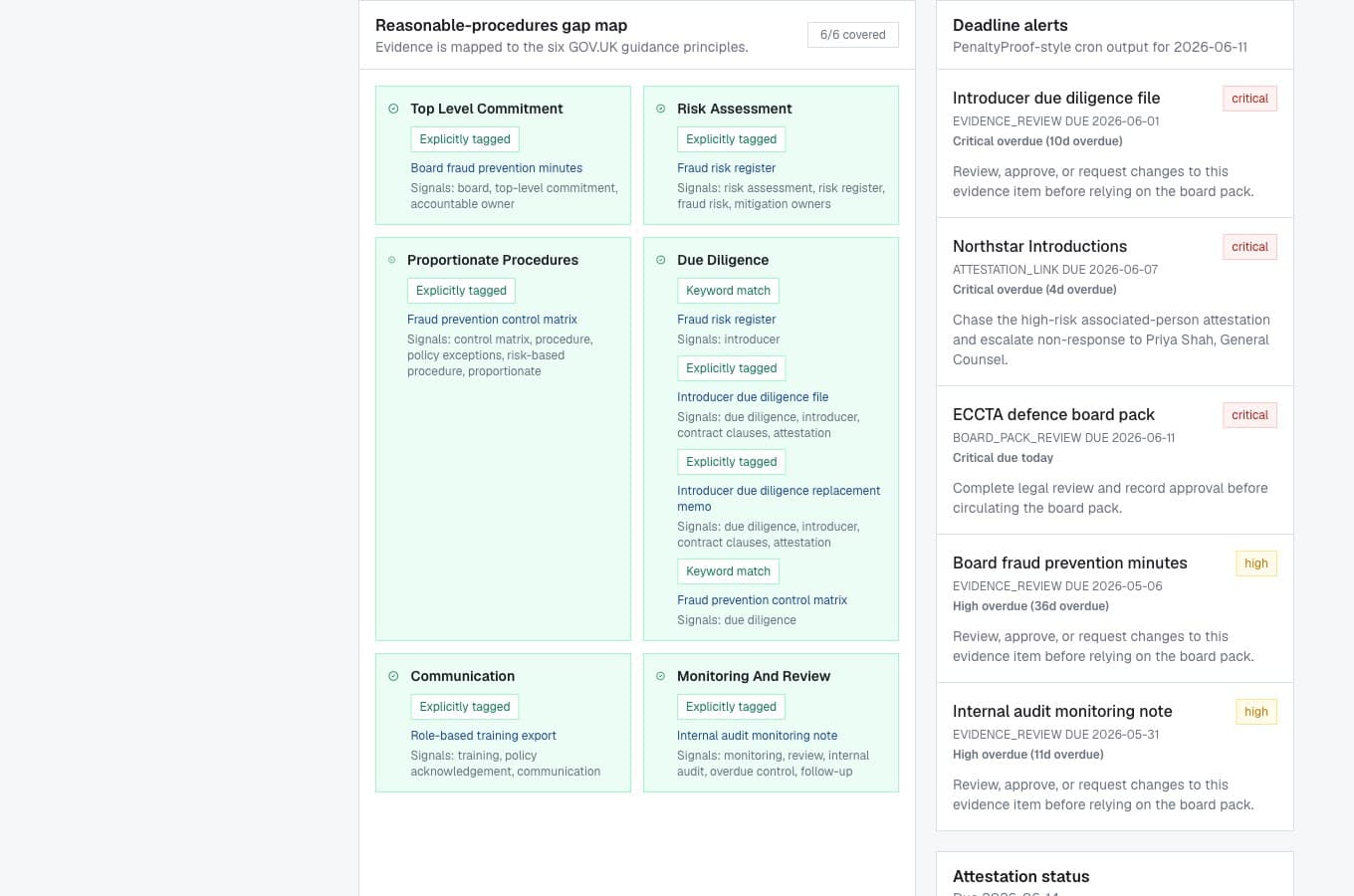
The exemplar maps nine fictional evidence items across all six principles — including monitoring and review, communication, and training — while keeping remaining review blockers visible.
Northstar stays pending as a high-risk fictional introducer while Helio shows the completed response state.
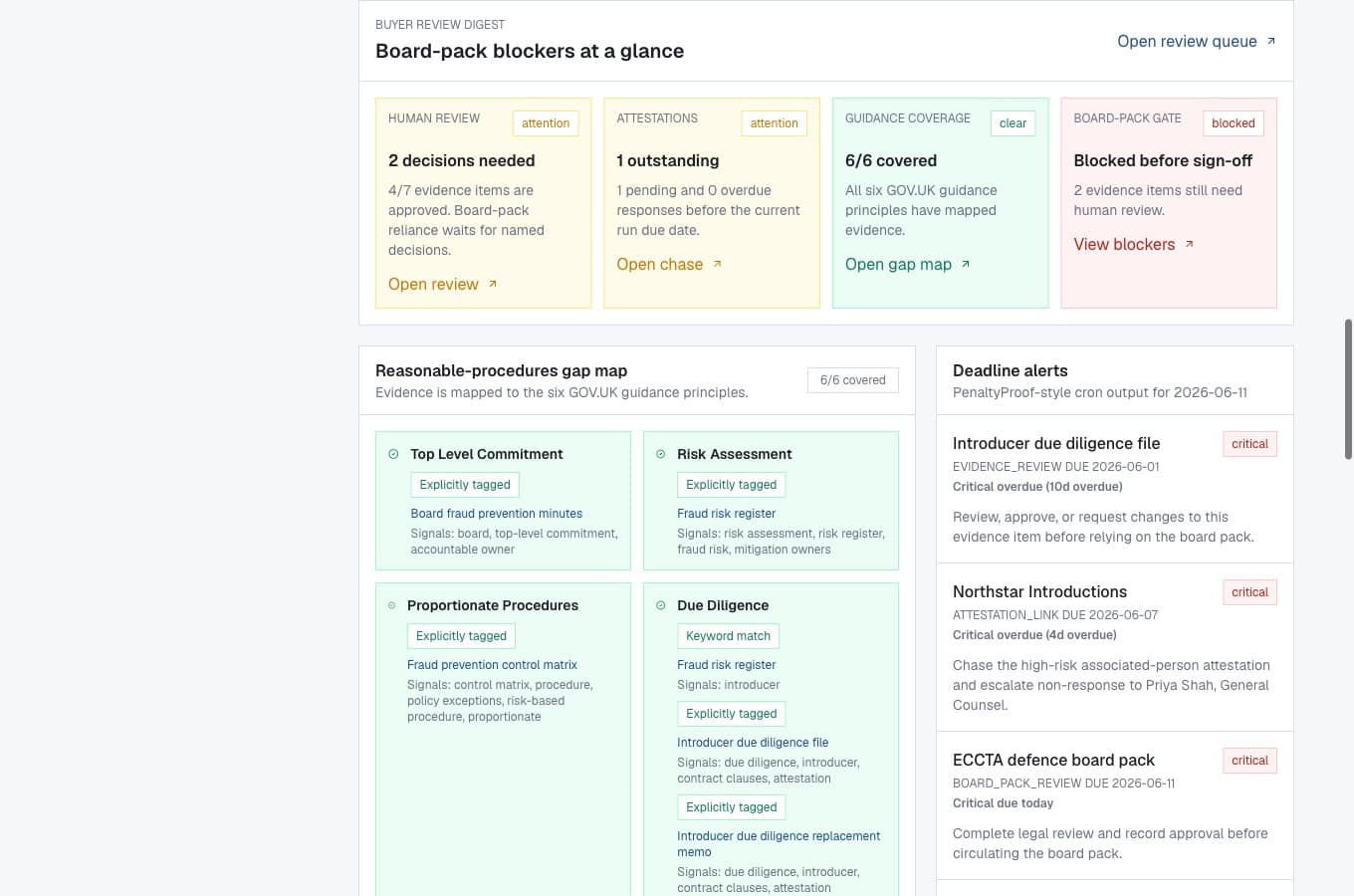
The blocker view explains why the exemplar file is coherent but still blocked before sign-off.
Buyer brings
After 90 days
Boundary
DefenceFile organises ECCTA readiness evidence, review trails, source metadata, attestation state, audit events, and board/adviser pack blockers. It does not provide legal advice, create privilege, certify scope, certify reasonable procedures, or guarantee that a statutory defence will succeed.
Ask the buyer to nominate one evidence bundle, one associated-person group, one reviewer, one board date, and one owner for each external evidence item.
Request pilot review